


2025 NASA Team
Optimizing Long-Term Risk Mitigation for Smarter Project Selection
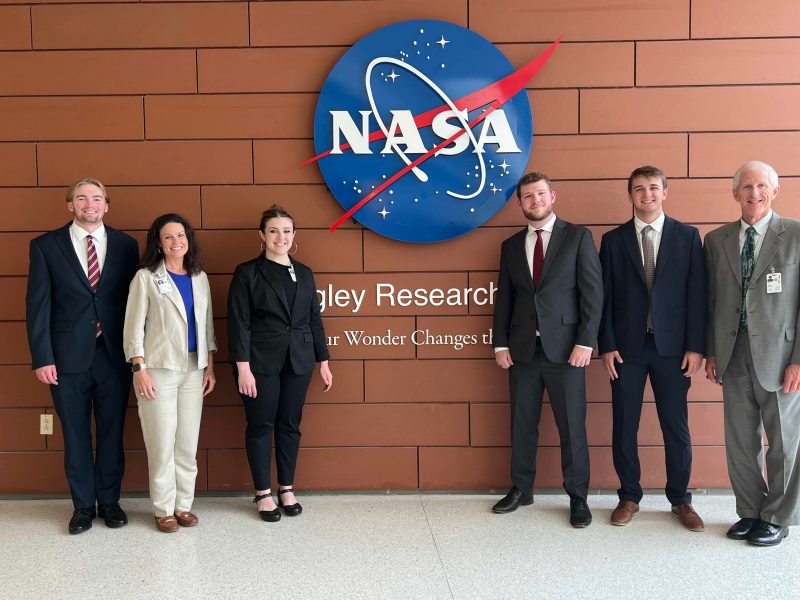
At A Glance:
Capstone Sponsor: NASA
Faculty Advisor: Dr. Andrew MacKinlay
Capstone Team Members: Claire Lympus, Jaden Dixon, Jeff Stepien, Chris Nelson
Solution Summary: Developed a parallel long-term risk assessment model to help NASA prioritize projects that deliver greater cost savings and risk reduction over time.
The Challenge
NASA Langley’s existing project selection framework focused heavily on short-term risk, which sometimes overlooked the significant long-term costs and risks of delaying certain maintenance or infrastructure projects. The agency needed a clearer way to compare short- and long-term risk trade-offs so it could invest resources at the optimal time — and avoid expensive future failures.
The Solution
The student team designed a new long-term 5x5 risk matrix that runs in parallel with NASA’s current short-term risk scoring. The model calculates how much risk and cost can be avoided by acting sooner rather than later, producing clear scores and visualizations to compare projects on the same 1–25 scale NASA already uses.
Using realistic case studies — like repainting vacuum spheres, maintaining wind tunnel foundations, and replacing aging fuel stores — the team showed how the new model highlights the tipping point where small, low-risk issues can snowball into costly problems. They included net present value calculations with adjustable hurdle rates, so NASA engineers can fine-tune the financial impact over time.
The Impact
The new framework helps portfolio managers see the bigger picture: which projects to fund now to maximize savings and reduce risk over the next 10–15 years. By integrating seamlessly into NASA’s existing planning cycle, the model supports smarter budget allocation, extends the life of critical infrastructure, and aligns with the agency’s push for digital modernization — all while saving millions in avoidable costs.
2025 NASA Team Public Presentation